
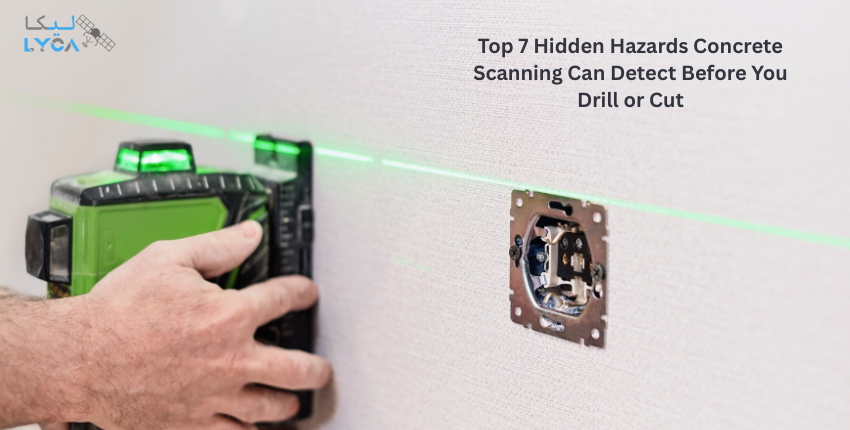
Top 7 Hidden Hazards Concrete Scanning Can Detect Before You Drill or Cut
Modern concrete structures carry dense networks of steel, cables, and embedded services. These elements support strength, load control, and building operations. Drilling or cutting without visibility risks damage, injury, and costly repair. Concrete scanning services help reveal what lies beneath hardened surfaces before work begins.
Advanced scanning methods rely on signal reflection and material response. They map internal features without breaking concrete. This approach supports accuracy, safety, and planning. Reliable construction safety concrete scanning reduces uncertainty during structural modifications and retrofit work.
Why Hidden Hazards Exist Inside Concrete
Concrete often hides more than expected. Designs change during construction. Utilities shift due to site conditions. Repairs introduce new elements over time. Visual inspection alone cannot confirm internal layout.
Concrete also ages. Cracks form. Moisture spreads. Reinforcement shifts under stress. These factors increase risk during drilling. Professional concrete scanning services provide clarity before any invasive action.
Hazard One: Post-Tension Cables Under Tension
Post-tension cables store high energy within concrete slabs. Cutting one can cause sudden release and severe injury. These cables often sit closer to surfaces than expected.
Scanning identifies cable paths and depth. It allows safe drilling zones to be marked. Accurate detection supports controlled work planning. Construction safety concrete scanning plays a critical role in avoiding cable strikes.
Hazard Two: Embedded Electrical Conduits
Electrical conduits run through slabs, beams, and walls. Their location may differ from drawings due to site changes. Striking live conduits can cause shock or equipment failure.
Non-destructive scanning locates conduit routes without exposure. Technicians mark safe paths for drilling. This prevents downtime and safety incidents. Concrete scanning services protect both workers and infrastructure.
Hazard Three: Reinforcement Steel and Mesh
Rebar and mesh provide structural strength. Cutting them weakens load capacity and causes cracks. Their density varies based on design and stress zones.
Scanning maps steel layout and spacing. It helps avoid cutting critical reinforcement. This maintains structural integrity during renovations. Concrete slab scanning technology in uae supports accurate rebar identification in complex builds.
Hazard Four: Hidden Plumbing Lines
Water and drainage pipes often pass through slabs and walls. Older buildings may lack accurate records. A single strike can cause flooding and long repair delays.
Scanning detects pipe paths and voids. It allows precise drilling with reduced risk. This improves planning and avoids emergency repairs. Reliable concrete scanning services help protect plumbing systems during modifications.
Hazard Five: Fiber Optic and Data Cables
Modern buildings include data and communication lines within concrete. These cables support security, networking, and control systems. Damage disrupts operations and requires skilled replacement.
Advanced detection tools identify non-metallic lines. This supports careful planning for anchors and cuts. Ground penetrating radar for utility locating helps trace data cables without exposure or damage.
Hazard Six: Voids, Cracks, and Honeycombing
Poor compaction or aging creates internal voids. These weak zones may not show surface signs. Drilling into them reduces anchor strength and causes surface failure.
Scanning reveals density changes within concrete. It highlights unsafe drilling zones. This improves fixing reliability and load performance. Concrete slab scanning technology in uae helps assess internal slab condition accurately.
Hazard Seven: Unknown or Abandoned Utilities
Old structures often contain unused pipes or cables. Records may be missing or outdated. These elements still pose risk during drilling.
Scanning locates abandoned utilities before work starts. This avoids surprises and delays. Clear mapping supports smoother project execution. Ground penetrating radar for utility locating is effective for tracing unknown paths.
How Concrete Scanning Supports Safer Workflows
Concrete scanning turns guesswork into informed action. It provides visual data before cutting begins. This reduces rework, injury risk, and structural damage.
Clear scan reports guide drilling locations and depth control. Teams work faster with confidence. Consistent construction safety concrete scanning improves site coordination and decision-making.
Applications Across Construction and Maintenance
Concrete scanning supports new builds, retrofits, and repairs. It aids anchor installation, core drilling, and saw cutting. Facility upgrades benefit from accurate internal mapping.
Engineers and contractors rely on scans for planning. Maintenance teams use scans for safe system upgrades. Professional concrete scanning services fit both large and small projects.
Our Expertise in Concrete Scanning at Lyca Survey
At Lyca Survey, we focus on accuracy, safety, and clear reporting. We apply proven scanning methods to detect embedded hazards before work begins. Our approach supports informed decisions and controlled execution.
We use reliable tools and trained surveyors. Our process aligns with site safety needs and structural care. We support projects with dependable concrete scanning services across varied building types.
Why clients choose us:
We specialize in construction safety concrete scanning for active sites
We apply advanced concrete slab scanning technology in UAE conditions
We use ground penetrating radar for utility locating with detailed interpretation
We deliver clear markings and easy-to-read scan reports
We help reduce damage, delays, and safety risks
Plan Safer Drilling and Cutting With Confidence
Before drilling or cutting concrete, hidden risks must be understood. We help you identify hazards and plan safe actions. Visit our official website to learn how we support accurate scanning and post-tension cable detection . Trust Lyca Survey to guide safer construction decisions with clarity and care.
